
paint, spray, tile and mosaic ~ mural materials
A ‘mural’ is an artwork applied on to a wall and though a tin of paint and a brush is commonly used, there are many more materials and methods beyond this. Some artists may specialise in a specific material and use only that whereas others may use a mixture dependent on the project.
Reminiscing on a trip to Porto, Portugal is actually what led me to this topic. The city is plentiful with murals and a lot of the churches double-up as public art. The country is famous for their patterned and colourful tiles so naturally many murals also use tiles. The church of Saint Ildefonso and Chapel of souls famously have blue and white hand-painted tiles on their exterior facades. Though these churches date back to the 1700’s the tile murals were only added by artists in the late 1920’s and early 1930’s.
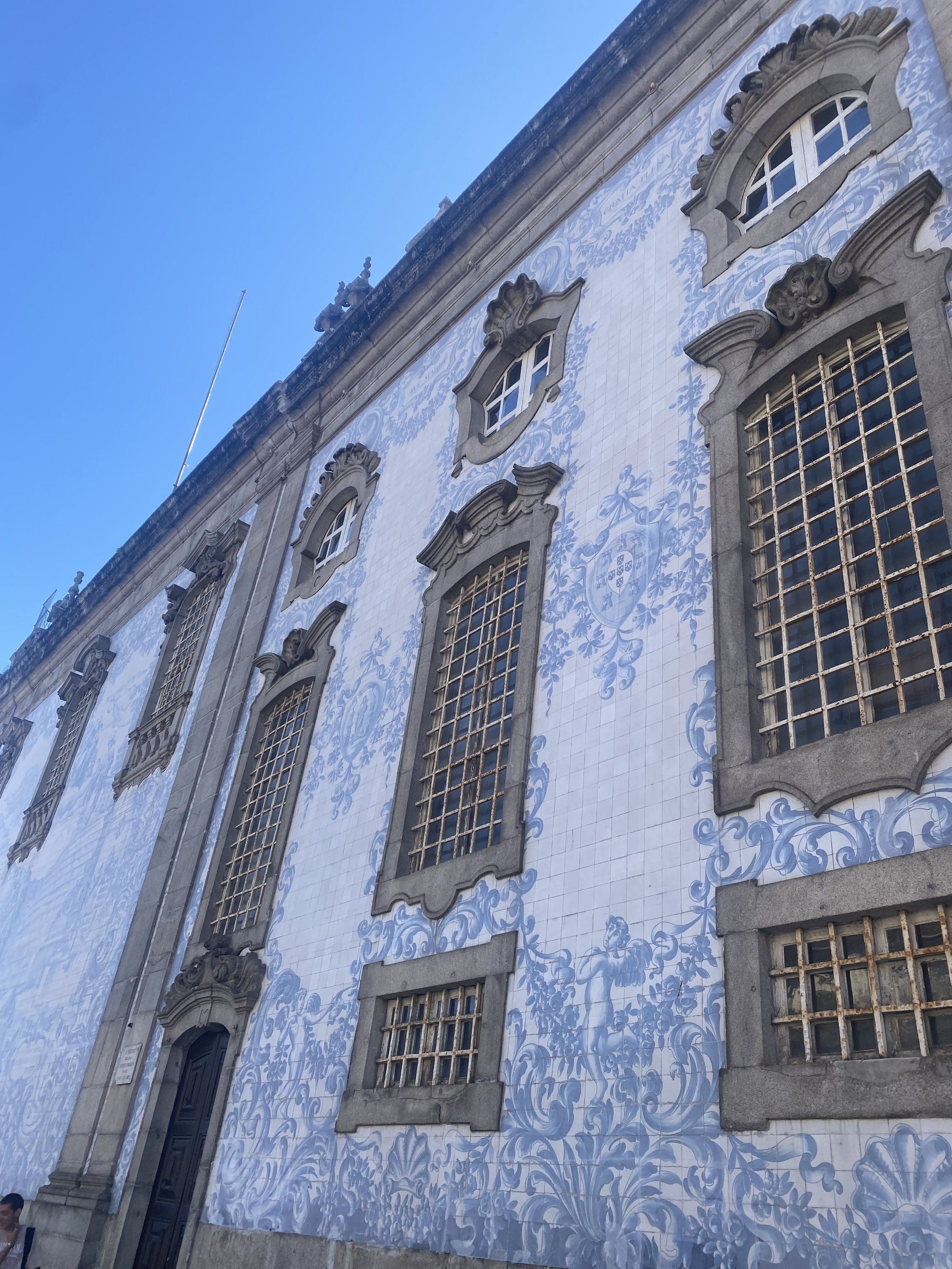
The Chapel of Souls, Porto. Mural designed by Eduardo Leite.
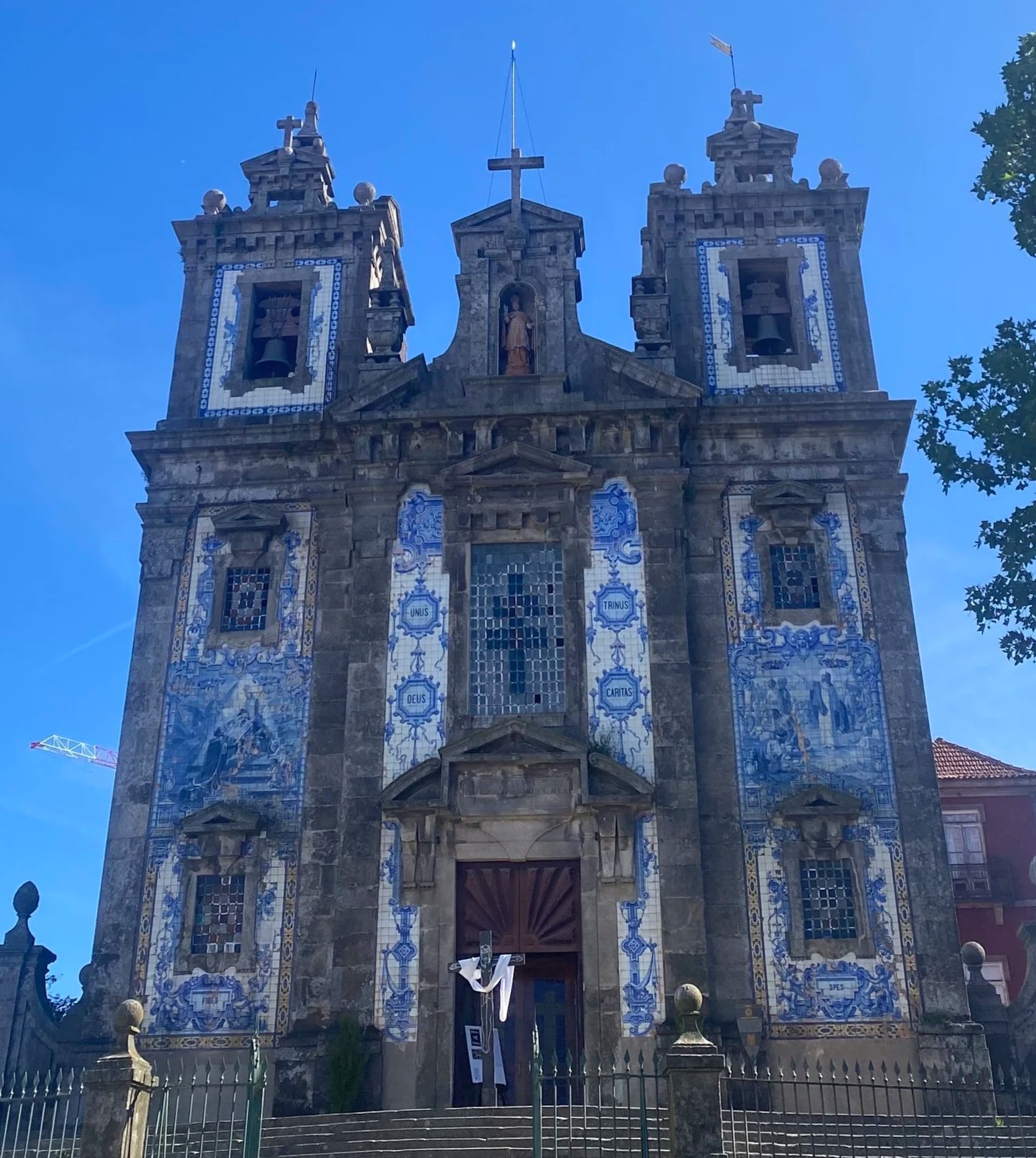
The Church of Saint Ildefonso, Porto. Mural designed by Jorge Colaco.
Modern artists such as Joanna Vasconcelos have since used tiles to create murals in their own style. Her mural in partnership with ‘Steak ‘n Shake’ consists of around 8,000 hand painted tiles that present as an outburst of colour and pattern. It certainly makes an impact and brightens up the street.
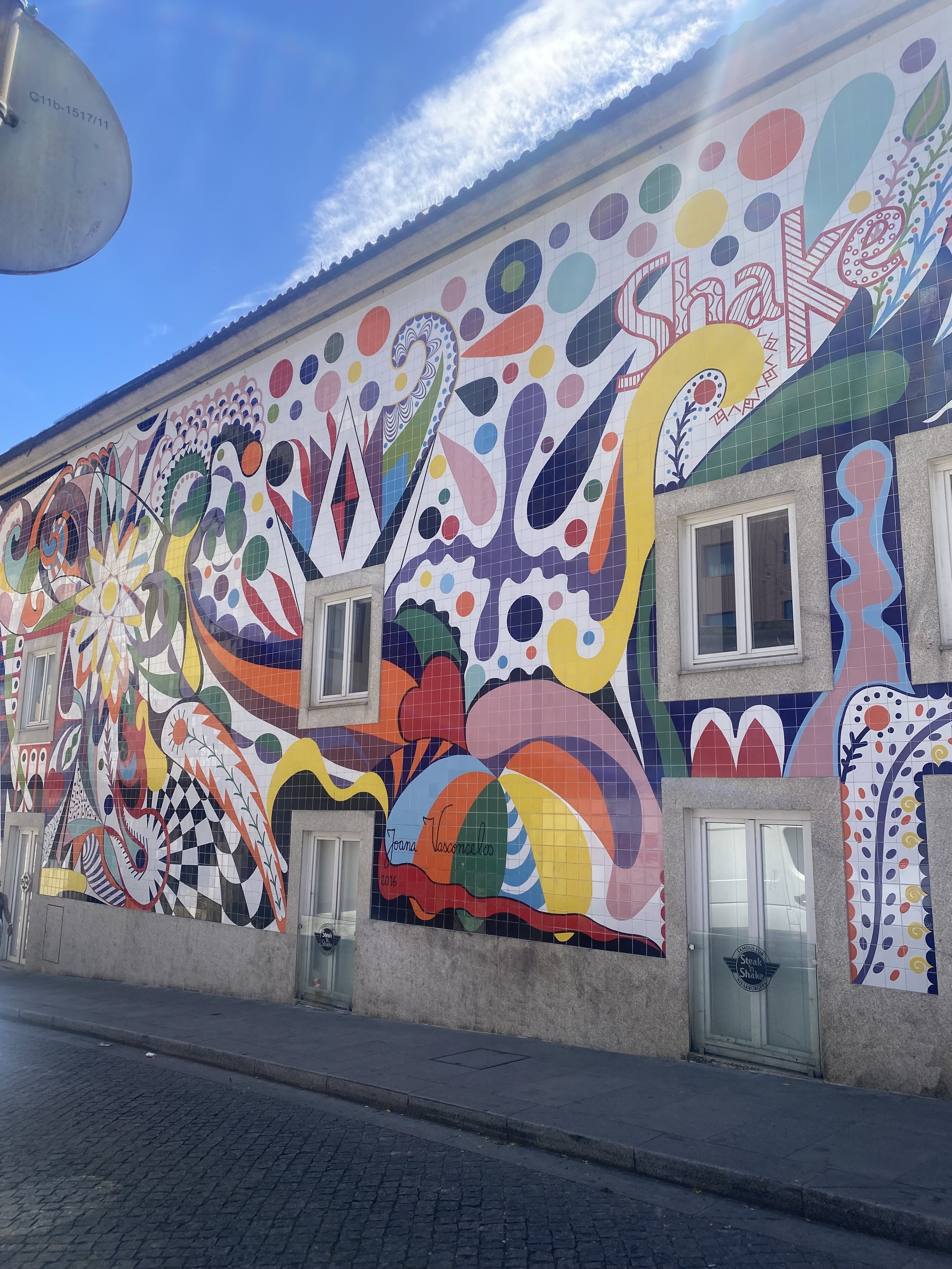
Steak ‘n Shake, Porto. Mural designed by Joanna Vasconcelos.
Another thriving artist, Danielle Casali (@danielle_afton_casali) from the USA uses paint alongside glass mosaic to create visually stunning murals in community spaces. Not only do her murals reflect the light but the different toned glass pieces used to create specific elements, makes for a beautifully interesting effect. Completing a mural such as this is no easy task, Danielle (with some help) has to paint, break glass, install panels, mosaic and grout to complete most of her murals, tedious tasks that lengthen the process.
As a side note, Danielle freehands the painted elements in her designs. Many mural artists now opt for projection, virtual reality headsets and transfer sheets to speed up getting the basic shapes down and only freehanding when absolutely necessary. This just speaks for her artistic intelligence, great skill and love of her craft. It’s 50/50 whether I freehand or project the design but the day I’m as efficient in freehand drawing my murals as Danielle is the day I’ll put that projector into storage. I really recommend checking out Danielle’s work on her Instagram @danielle_afton_casali
Now bringing the conversation back to my home, the UK. When many think of spray paint they think of graffiti. Without delving too far into the unknown territory of the UK graffiti scene or entering into a graffiti vs street art debate, I will only say this; anything created by paint or pens for the public with the intent to only create and express not to destroy or create divides, is (to me at least) a mural. Honourable mentions to mul (@mul_draws) and graffiti duo namida (@nam1d4) who are well established in the graffiti scene with their own style of graphic mural art that I’ve been enjoying recently. Spray paint is the material of choice by many muralists because of its versatility, speed and smoothness. Daniel aka mr murals (@mrmurals) and spray saint (@spray.saint) both regularly use it to create insane realistic masterpieces of animals and people.
I am yet to properly explore using spray painting in my muralling but it’s definitely the next material I want to start learning. I use paint and brushes for my murals & paint or paint pens such as POSCA or Edding for windows. Ultimately regardless of the materials or methods used they all create art often for the public viewing, enhancing the environment and reflecting the community around it. Artists may use a mixture of materials for projects or throughout their career as their skills and knowledge increase. Everyone was a beginner at one time, so go use a new material or method and expand your craft!
